

Before buying Lumary Permanent Outdoor Lights 3, measure your eave length accurately, understand the 60-lumen brightness and tunable white options, compare smart controls, and verify your exact model before purchasing mounts. Planning ahead on wiring, weather ratings, and future expansion leads to a smoother installation and longer-term satisfaction.
Permanent outdoor lighting has moved far beyond its original purpose as a holiday-only indulgence. Homeowners now treat it as a year-round architectural feature — something that highlights the roofline every evening, not just during the last two weeks of December. That shift in expectations means buying decisions carry more weight than they used to.
I get asked constantly about what to check before purchasing Lumary Permanent Outdoor Lights 3, so I put together this buying checklist. This isn’t a rehash of my October 8 Lumary installation guide; it’s the research phase that should happen before you ever open the box. I’ll walk through sizing, brightness, color technology, smart controls, zone customization, installation planning, mounting hardware, weather resistance and durability, future expansion, and — critically — model verification before you buy mounting accessories.
1. Know Exactly How Much Roofline You Need to Cover

The single most common mistake homeowners make is underestimating how much lighting they actually need. It’s tempting to eyeball the front of the house and call it done, but that approach almost always comes up short.
What you actually need to measure is the illuminated eave path — not the width of your house. Roof peaks, garages, porches, dormers, bump-outs, and overhangs all add footage that’s easy to forget when you’re estimating from the driveway. For an accurate read, use a proper measuring tool and walk the entire roofline, section by section. The National Institute of Standards and Technology offers helpful general guidance on measurement accuracy if you want a refresher on getting consistent results.
As an example: a home with 118 feet of eaves may actually require a 150-foot kit once peaks and overhangs are factored in. Lumary Permanent Outdoor Lights 3 kits come in four sizes:
- 100 ft
- 150 ft
- 200 ft
- 300 ft
And if your layout is more ambitious, the system can expand up to 1,200 feet with additional supplies. Measure first, round up, and you’ll avoid the frustration of running short mid-installation.
2. Understand What 60 Lumens Per Light Really Means
Lumen ratings get thrown around a lot in product listings, but they rarely get explained. Lumary Permanent Outdoor Lights 3 produces 60 lumens per light. For comparison, Govee Pro sits at 50 lumens, and Enbrighten comes in at 33 lumens at 2200K.
That gap matters more than it sounds. Sixty lumens per light gives you enough output for everyday architectural accent lighting, not just holiday visibility. It also supports safety lighting around walkways and driveways — a detail that’s easy to overlook until you’re the one trying to find your porch step in the dark. The U.S. Department of Energy’s LED lighting basics page is a solid resource if you want a deeper explanation of how lumens relate to perceived brightness outdoors.
Bright doesn’t have to mean harsh, though. Placement matters just as much as raw lumen output. A well-positioned 60-lumen light washing gently across a soffit looks completely different from the same light aimed directly at a window.
3. White Light Matters Just as Much as RGB Colors
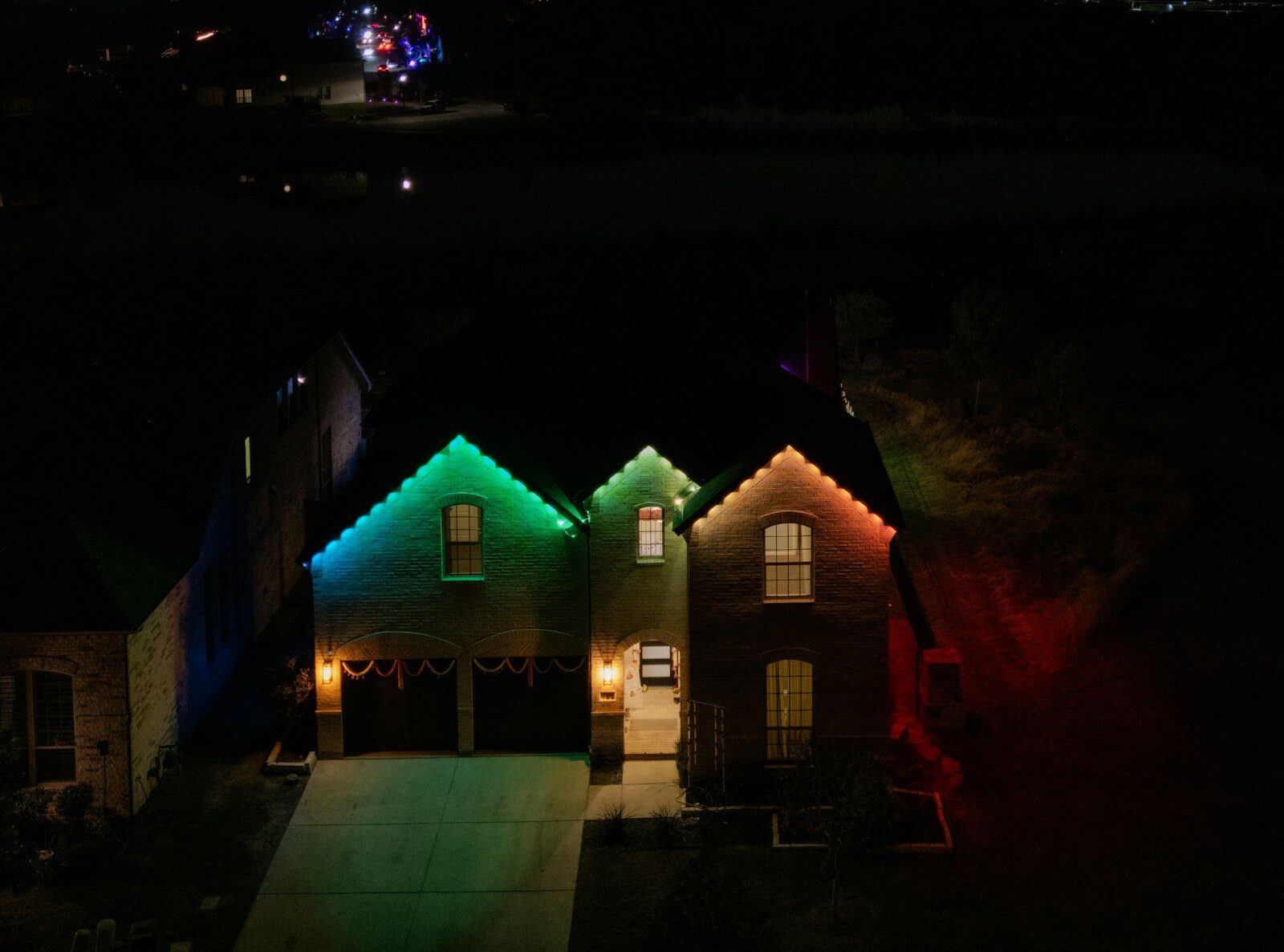
Everyone gets excited about color-changing lights, but tunable white output is where these systems earn their keep for most of the year. Lumary Permanent Outdoor Lights 3 offers tunable white from 2200K to 6500K, covering Warm White, Neutral White, and Daylight White.
Under the hood, the system uses RGBICW/RGBAI technology, which separates the white LEDs from the RGB diodes. That separation is what lets you get over 16 million color options without sacrificing clean, true white light the rest of the year. For general context on how outdoor lighting color temperature affects a home’s exterior, ENERGY STAR’s outdoor lighting guidance is a useful reference point.
In practice, this flexibility means:
- Warm white for everyday year-round ambiance
- Cool white for security and visibility
- Holiday colors for December displays
- Team colors on game day
- Patriotic themes for summer holidays
- Custom colors for birthdays or celebrations
With 150+ preset scenes and an AI Lighting Creator feature, you’re not stuck manually building every look from scratch.
4. Look Beyond Colors and Compare Smart Controls
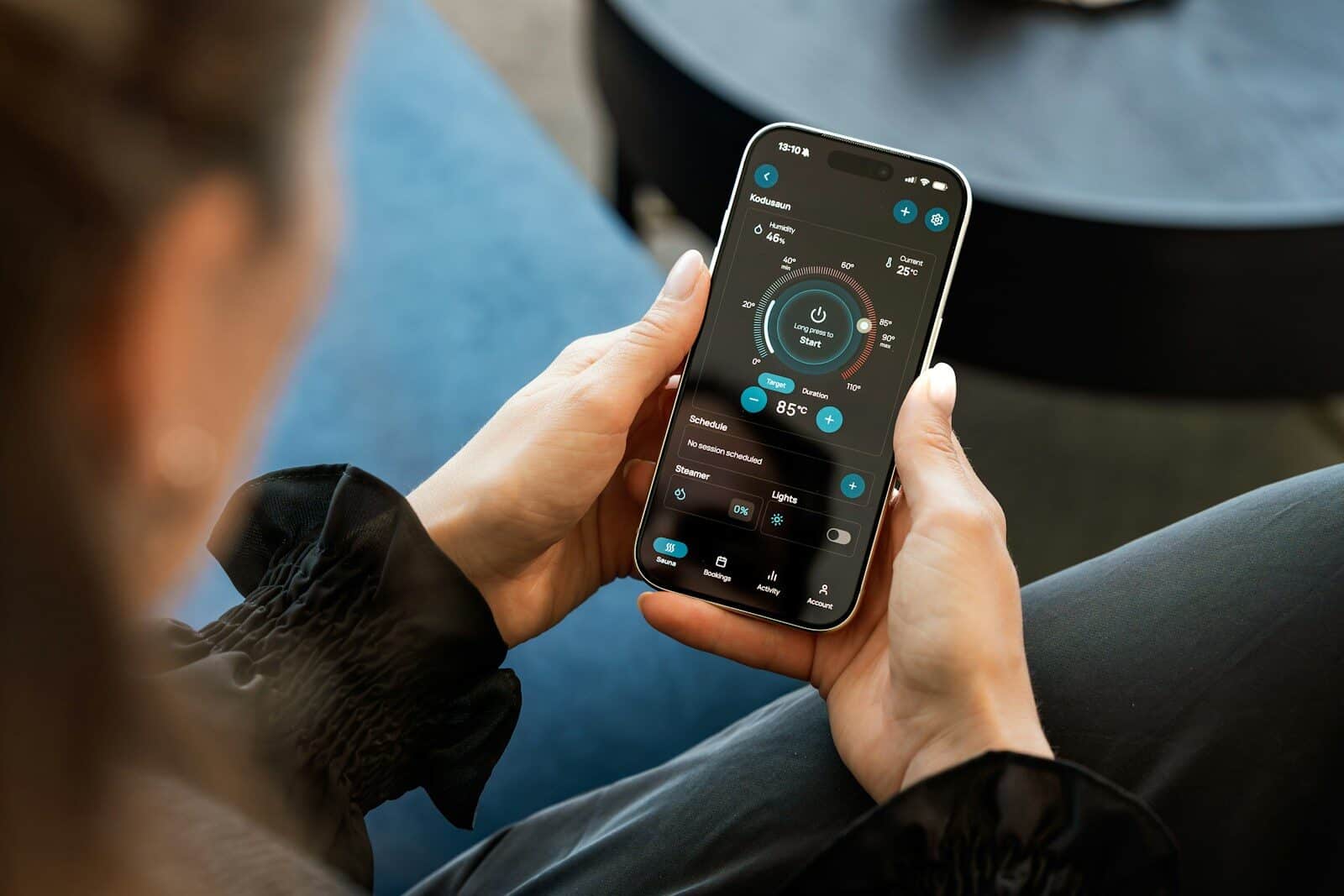
Smart control compatibility is where buyers often assume more than what’s actually offered. Lumary Permanent Outdoor Lights 3 supports the Lumary App, Alexa, Google Home, WLED, Home Assistant, and direct voice commands. That covers scheduling, timers, automation, and custom scene creation.
Here’s the honest part: the Lumary app works, but a lot of users find competing apps more intuitive. That’s worth knowing before you buy, especially if app experience is a priority for you.
For context on how these systems stack up:
- Eufy S4 and Govee Pro both support the Matter smart home standard, which allows broader cross-platform compatibility.
- Cync focuses on simpler, more streamlined consumer controls rather than deep customization.
- Lumary does not currently support Matter, so if that specific standard matters to your smart home setup, factor that into your decision.
If Alexa or Google Assistant integration is central to how you plan to use the system, it’s worth reviewing Google’s smart home device documentation or Amazon’s Alexa smart home resources to confirm compatibility with your existing setup before purchasing.
5. Zone Control Can Completely Change Your Lighting Experience
One feature that doesn’t get enough attention is 32 Zone Control. This lets different sections of your installation display different colors, brightness levels, and schedules simultaneously — rather than treating your entire roofline as one uniform strip.
Practically, that means your garage can run a completely different scene than your front porch, while your roof peaks and dormers do their own thing entirely. Back patio lighting can stay subtle for everyday use while your front-facing zones go all-out for Halloween or Christmas.
Zone control is what separates a lighting system from a lighting display. If you’re the type of homeowner who likes switching things up for game day, seasonal décor, or simple landscape accenting, this is a feature worth prioritizing over flashier marketing claims.
6. Installation Is Easier When You Plan Before Opening the Box
Before any wire gets mounted, there are a handful of questions worth answering on paper first:
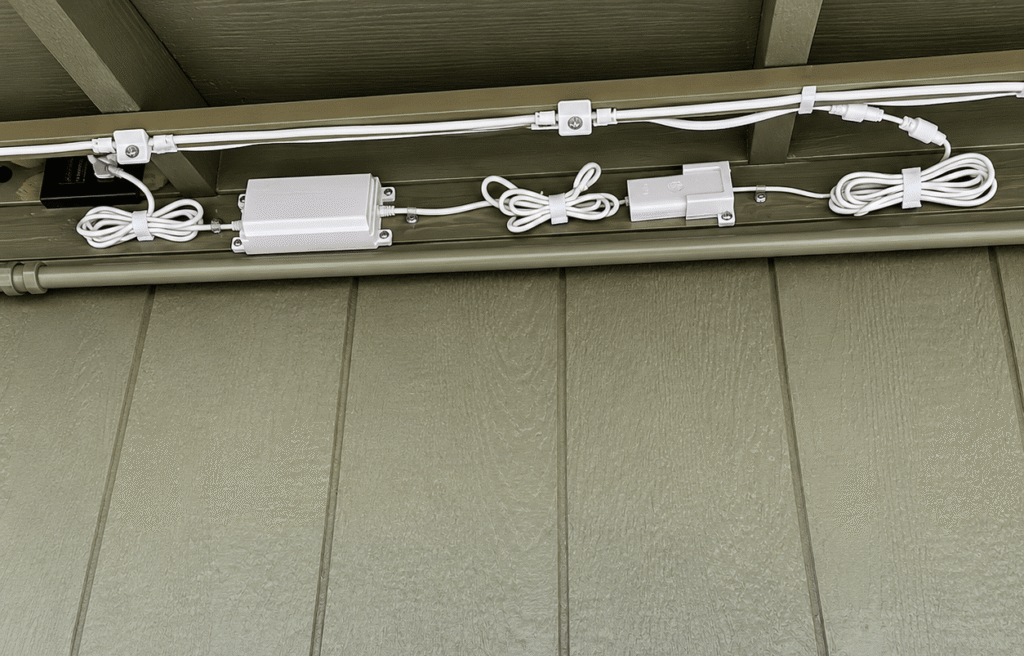
- Where will the controller go?
- Where is your nearest power source located?
- How will wiring be hidden from view?
- Will you need extensions for longer or more complex runs?
- Where will cables need to cross between roof sections?
Skipping this planning step is how projects end up with visible wiring or a controller mounted somewhere inconvenient.
A trick that saves a lot of frustration: do a nighttime mock-up using painter’s tape and temporary lighting before committing to final placement. It lets you test spacing and sightlines in the actual lighting conditions you’ll be living with.
For mounting distance, aim for lights positioned 3 to 8 inches from the wall. This range produces the best wash effect against siding or soffit, rather than a harsh direct glare. And remember — the entire point of a permanent system is eliminating yearly ladder trips. A little extra planning now pays off every season afterward.

7. Don’t Ignore Mounting Hardware
Factory adhesive is convenient for a first install, but it shouldn’t be trusted as your only long-term mounting solution. Adhesive degrades with extreme temperature swings, UV exposure, and time — exactly the conditions permanent outdoor lighting lives in.
For durability, pair adhesive backing with mechanical clips or purpose-built mounting accessories. The right approach also depends on your soffit material:
- Vinyl
- Wood
- Metal
- Fiber cement
Each surface behaves differently, and professional installations almost always secure lighting mechanically rather than relying on adhesive alone. It’s a small added step that prevents a far more annoying repair job down the line.
8. Weather Ratings Matter More Than Most Buyers Realize For Permanent Outdoor Lights
Weather claims get buried in spec sheets, but they’re one of the most important details for permanent installations. Lumary Permanent Outdoor Lights 3 carries an IP67 rating on the lights themselves, while the control box is rated IP65.
The difference matters: IP67 indicates strong resistance to both dust and temporary submersion, while IP65 protects against dust and water jets but not submersion. That’s exactly why the control box needs separate, protected placement from the lights themselves — verify every component’s rating, not just the LEDs. For a clearer breakdown of what these ratings actually test, the IEC’s IP ratings overview is a reliable technical reference.
The system is rated for operating temperatures from -4°F to 140°F, covering rain, snow, dust, and heat. Expected lifespan runs up to 50,000 hours, which is a meaningful number when you consider these lights typically run every night rather than just during a holiday season.

9. Think About Future Expansion Before You Install
It’s easy to plan only for your current needs, but many homeowners eventually want to extend coverage to patios, garages, detached buildings, pool houses, or pergolas. If that’s even a remote possibility for your property, it’s worth planning for now rather than retrofitting later.
That means thinking through controller placement, available power sources, and cable routing with room to grow. Lumary’s dual-output architecture can support longer rooflines and more complex layouts, but expansion goes more smoothly when the groundwork is laid during the original install rather than added piecemeal afterward.
One balanced note worth mentioning: for homeowners with highly complex rooflines requiring extensive cutting and splicing, Govee Pro currently has more publicly documented customization guidance available. That’s worth weighing if your property has an unusually intricate layout.
10. Verify Your Exact Lumary Model Before Buying Mounts
This is the step that trips up more buyers than any other on this list. Not every Lumary light housing is identical — a mount designed for the Lumary Permanent Outdoor Lights Max will not necessarily fit Lumary Permanent Outdoor Lights 3.
Before purchasing any third-party mounting accessory, confirm your exact model and housing dimensions first. Skipping this step is how homeowners end up with mounts that don’t seat properly, leading to lights that sag, shift, or pull loose over time.
This is actually where Deliciosa Decor comes in — they manufacture precision-fit mounting solutions for multiple lighting systems, including Lumary, and continue expanding support for new models and custom requests as new housings are released.
Should You Choose Lumary Permanent Outdoor Lights 3?
Lumary Permanent Outdoor Lights 3 is a strong fit for homeowners who want permanent holiday lighting, everyday accent lighting, smart home integration, bright architectural illumination, voice control, deep customization, DIY installation, and long-term durability all in one system.
That said, every home is different. Roofline complexity, smart home ecosystem, and long-term expansion plans all affect which system — and which accessories — will serve you best. Planning before purchasing almost always leads to better results than buying first and figuring it out later.
Measure Twice, Mount Once
Getting the most out of Lumary Permanent Outdoor Lights 3 comes down to a handful of decisions made before installation day: measure your eaves carefully, plan controller and power placement, think through wiring routes, verify your mounting accessories, consider future expansion, and compare the smart features that actually matter for your household.
Above all, before purchasing mounting accessories, always verify your exact Lumary Permanent Outdoor Lights 3 model. Mounts designed for one Lumary housing should never be assumed to fit another. If you want mounting hardware built specifically for your setup, it’s worth exploring Deliciosa Decor’s precision-fit mounting solutions for compatible lighting systems — including custom requests if your layout doesn’t fit a standard kit.
Frequently Asked Questions
Are Lumary Permanent Lights bright enough for everyday lighting?
Yes, thats what makes permanent outdoor lights a top choice for homeowners At 60 lumens per light, Lumary Permanent Outdoor Lights 3 provides enough brightness for everyday architectural accent lighting and pathway illumination, not just holiday visibility. Proper placement enhances the effect further, since positioning matters as much as raw output.
Can Lumary Permanent Outdoor Lights 3 stay outside year-round?
Yes. The lights carry an IP67 rating and the control box is rated IP65, with an operating range of -4°F to 140°F. The system is built to handle rain, snow, dust, and heat for continuous outdoor use.
Does Lumary Permanent Outdoor Lights 3 work with Alexa and Google Assistant?
Yes. The system supports Alexa, Google Home, WLED, Home Assistant, and direct voice commands, along with mobile app scheduling, timers, and automation through the Lumary App.
Can I expand Lumary Permanent Outdoor Lights 3 later?
Yes. The system can expand up to approximately 1,200 feet with the appropriate additional supplies. Expansion works best when you plan controller placement, power availability, and cable routing in advance.
Do I need special mounts for Lumary Permanent Outdoor Lights 3?
Yes. Always purchase mounts specifically designed for your exact Lumary model, since different Lumary housings are not universally compatible with one another. Mounts made for Lumary Max Lights will not work with the Lumary Permanent Outdoor Lights 3.


